In 2015 I started attending the Midwest Energy Fair, held in Custer, WI (very near me in Wisconsin Rapids.) They offered several one hour seminars on energy efficient building concepts and principles. There I learned about Wisconsin's Focus on Energy program that promotes energy efficent building. They have a program where a new home can get Focus on Energy Certified by following energy efficenent building techniques and exceeding code by more than 33%. It was then I decided to adhere to that concept as much as feasible considering costs and finding a builder who was part of the Focus on Energy program (more on finding a builder is discussed in Drawing a Plan & Finding a Builder.)
High energy efficient building focuses on insulation, airtight construction, passive solar heating, and high efficient heating & cooling. Because my house is facing southwest instead of straight south, and because of the windows available to me, the passive solar is harder to achieve. But I did plan for better than code insulation, an airtight house with a plan for makeup air, and a furnace with a 96% efficiency.
I did not adhere to all the recommendations for high energy efficient building. If I did, I would have had a lot fewer windows and smaller ones. But I am building on a beautiful lake and the view is an important part of the aesthetic. So I compromised to some extent.
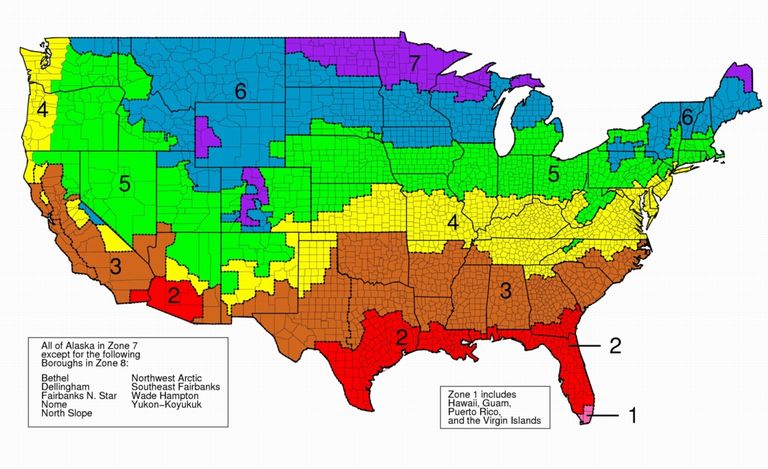
When deciding on the right amount of insulation I needed to determine what climate zone I was in according to the Department of Energy. Turns out that Florence County is in DOE's Climate Zone 7 - Very Cold, which is the same as most of Alaska. It is interesting that Dickinson County, Michigan, just a mile away as the crow flies, is Zone 6 - merely Cold. So I went on the premise that my house is in zone 6.5.
Wisconsin code is the same as DOE Energy Star requirements. But, I learned in the seminars at the Energy Fair, that for really great energy efficiency the recommendation is more stringent. I ended up somewhat different from both.
| Zone 7 Energy Star & WI Code | Energy Fair | My House Zone 6.5 | |
| Insulation R-Values | |||
| Basement Slab | R-10 | R-10 | R-20 |
| Basement Walls | R-15 | R-20 | R-20 |
| Wood Frame Walls | R-21 | R-40 | R-32.6 |
| Ceiling/Roof | R-49 | R-60 | R-60 |
Insulation R-value is a measure on how well a material resists the conductive flow of heat. The higher the value, the better the insulation is at not allowing heat to move through the material. Typically R-values refer to the R-value of the insulation only. But the whole wall has a lower R-value due to the framing and windows having different R-values than the insulation.
I decided to double the insulation under the slab and forgo the in-floor heating. It saved me about $8,000 and since I won't heat that area unless I have company, it made sense. And once the basement floor is heated up, the extra slab insulation should keep the heat in without problem.
Originally, I specified a staggered stud wall with a Blown In Blanket System (BIBS®) using fiberglass . This is essentially two walls made of 2x4's that are then put together staggering the 2x4 studs. This eliminates the thermal bridging of the studs since none span the entire cavity between the walls. With the BIBS® system this results in an R-value of about R-32.
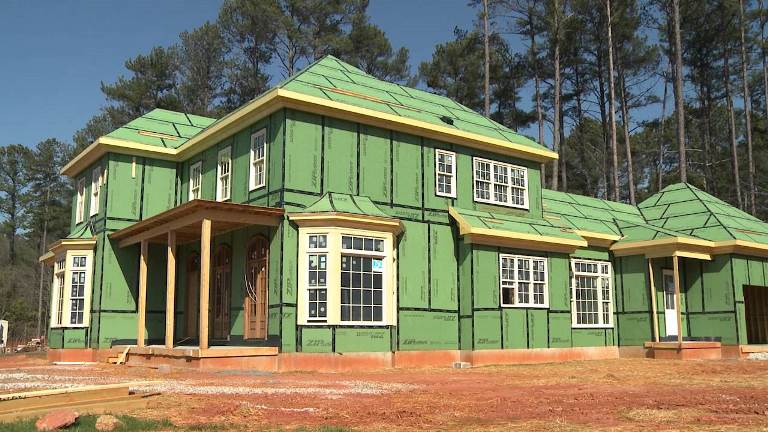 My Builder, Nick, was not comfortable with the staggered stud due to stability issues, so he suggested a ZIP® system, where the normal sheathing and Tyvek® house wrap are replaced with a panel consisting of foam backed sheathing and moisture barrier.
We settled on a 2x6 wall, BIBS®, and a 1-1/2" foam ZIP® system. With BIBS in a 2x6 cavity I get R-23 and with the ZIP system another R-9.6, so I'll have R-32.6 insulation with no thermal bridging. Not quite the R-40 that is recommended for high energy efficient, but way better than R-21 code. And, believe me, getting to R-40 is $$$$.
However, all that work will get compromised by window choices. So that was next.